
If you have been told you need a bone graft before getting dental implants in Winter Springs, you may feel a bit concerned. The term sounds complicated, and it’s natural to wonder what it involves and whether it will be painful.
Bone grafting is a routine, well-established procedure that helps thousands of patients each year successfully receive dental implants. At New Smile Dentistry & Orthodontics in Winter Springs, FL, we recommend bone grafting to ensure our patients have a strong foundation for their new teeth.
This guide explains what bone grafting is, why it might be necessary, and what you can expect from the procedure and recovery.
What Is a Bone Graft?
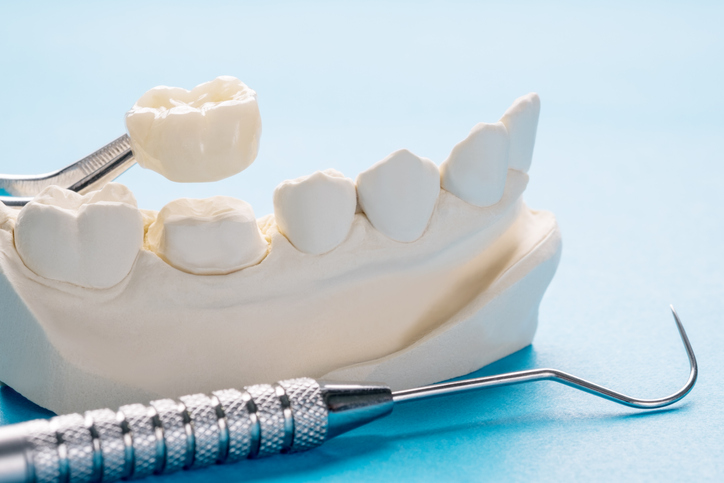
A bone graft is a surgical procedure that adds bone material to your jaw in areas where bone volume or density has decreased. Think of it as reinforcing the foundation of your jaw so it can support a dental implant.
When you lose a tooth and leave it missing for a while, your jawbone gradually begins to shrink. This happens because the bone needs stimulation from the tooth root to stay strong. Without that stimulation, your body naturally resorbs (dissolves) the bone tissue, much like muscles atrophy when they aren’t exercised.
Severe gum disease also causes bone loss. As gum disease progresses, the infection damages the bone supporting your teeth. Before placing an implant, Dr. Firas Marouf or Dr. Benson will measure your jawbone using imaging such as a CBCT scan. If you don’t have enough bone in width or height, your implant won’t have proper support and may fail.
Bone grafting rebuilds your jaw, so your implant has a strong, stable foundation.
Why You Might Need a Bone Graft
Approximately 40-60% of patients requiring single dental implants have some degree of bone deficiency that may require grafting. Here are the most common reasons bone grafting is recommended:
1. Tooth Loss and Bone Resorption
When a tooth is extracted, the jawbone in that area begins to shrink. Studies show that the horizontal dimension of the ridge decreases 3-4 mm in the first 12 months, with 63% of that resorption occurring in the first 3-6 months. If the tooth was removed years ago, there may be insufficient bone for implant placement. A bone graft can rebuild the ridge, often using a combination of materials to restore the width and volume needed.
2. Thin or Narrow Jawbone
There may be inadequate bone if your bony ridge is extremely thin. Dimensional thresholds for safe implant placement require a ridge width of at least 6 mm horizontally (from buccal to lingual) and a vertical height of at least 10 mm from the crest to the superior anatomic structure. If your ridge is too thin, a bone graft can be placed alongside the existing bone and allowed to heal for up to six months, creating a broader ridge.
3. Sinus Cavity Issues in the Upper Jaw
If the sinus cavities in your upper jaw are very large or very low, they may extend into the tooth-bearing areas. This often occurs when teeth in the back of the upper jaw have been missing for many years, limiting the bone available for implant placement.
A sinus grafting procedure is then required. During this procedure, the membrane lining the sinus is located and elevated, and bone is added to restore the bone height needed for adequate implant length.
4. Socket Preservation After Extraction
When the walls of your extraction socket are very thin, as is often the case with upper and lower front teeth, a bone graft is often placed at the time of tooth extraction. This step helps your body fill the empty socket with bone and maintains the width and volume needed for later implant placement.
Types of Bone Graft Materials
Your dentist has several options for bone graft materials. The choice depends on how much bone you need, your healing ability, and your preferences.
Autograft (Your Own Bone)
This is bone harvested from another part of your body, such as the jaw, hip, or tibia. It’s the “gold standard” because it’s living tissue and integrates most reliably with your existing bone. However, it requires a second surgical site, which means additional healing time.
Allograft (Donor Bone)
Allograft is bone from a donor, typically obtained from a tissue bank and processed and sterilized to make it safe. Your body treats it as a scaffold and gradually replaces it with your own new bone. Allograft has excellent proven success rates and doesn’t need harvesting bone from you.
Xenograft (Animal Bone)
Xenograft is bone from animals, usually cows, that has been processed for human use. Like allograft, it provides a scaffold that your body gradually replaces with new bone. It demonstrates excellent resorption resistance, with less than 5% annual resorption.
Synthetic Materials (Alloplasts)
Synthetic bone substitutes are manufactured materials designed to function like bone tissue. They are reliable and eliminate any concern about disease transmission, though they may integrate slightly more slowly than natural bone materials.
Many procedures use a combination approach, such as mixing 40-50% autogenous bone with 50-60% allograft or xenograft.
The Bone Grafting Procedure
Bone grafting is typically an outpatient surgery performed under local anesthesia, though some patients choose sedation. Here is what you can expect:
Step 1: Evaluation and Imaging
Before the procedure, Dr. Marouf or Dr. Benson will use a 3D scan to assess your bone volume and determine whether a graft is needed. This is part of your implant consultation at New Smile Dentistry.
Step 2: Graft Placement
Your dentist makes a small incision in your gum to access the bone underneath. The bone graft material is placed in the area where bone is missing, often secured with a protective membrane or small screws to hold it in place while it integrates. In many cases, the graft is performed at the same time as tooth extraction, which is called socket preservation.
Step 3: Closure and Healing
Your dentist closes the gum with stitches. These stitches dissolve on their own or are removed at a follow-up appointment.
Step 4: Healing and Integration
Over time, the graft integrates with your existing bone, creating a stronger foundation. The healing process follows a predictable timeline: early bone formation begins at 4-8 weeks, with complete incorporation typically achieved by 16-24 weeks. Your body begins integrating the bone graft immediately, but full integration typically takes 4 to 6 months, sometimes up to a year depending on the size of the graft.
Step 5: Implant Placement
Once sufficient bone volume is confirmed, your dental implant can be placed. This is a separate procedure scheduled after complete healing.
Recovery and What to Expect
Recovery after bone grafting is generally manageable. Most patients describe it as mild discomfort rather than real pain. Here is what you can expect:
The First Few Days
- Swelling: Swelling is normal and typically increases during days 1-3, then gradually decreases. Use ice packs for the first 24-48 hours to minimize swelling.
- Discomfort: Manageable with over-the-counter pain medication. Postoperative pain scores typically resolve to less than 3 out of 10 by day 7.
- Diet: Eat soft foods and avoid hot foods for the first few days.
- Smoking: Avoid smoking and spitting forcefully, as these can disrupt the healing graft. Smoking increases resorption by 20-30% and is a relative contraindication for grafting.
Timeline
- 85-90% of patients resume normal function within 2-3 weeks.
- 95%+ return to full function by 12 weeks.
- Healing duration: 4 to 6 months, sometimes up to a year depending on the size of the graft.
Follow-Up
You will need follow-up appointments so your dentist can monitor healing. They may take new imaging at 3 months to verify the graft is integrating properly.
Bone Grafting at New Smile Dentistry
At New Smile Dentistry & Orthodontics, your bone grafting and implant journey is supported by an exceptional team. Dr. Melvin Benson, DDS, FAGD, is one of only 6% of general dentists nationwide to earn a Fellowship in the Academy of General Dentistry. He has over 835 hours of post-doctoral education and advanced training from the Pikos Institute and the McGarry Implant Institute, with extensive experience in implant surgery, bone grafting, and full-arch reconstruction.
This level of expertise means you receive care that is precise, predictable, and built to last.
Schedule Your Bone Grafting Consultation in Winter Springs, FL
If you’ve been told you need a bone graft before getting implants, or if you’re considering implants and want to know whether you’re a candidate, we are here to help.
Call New Smile Dentistry & Orthodontics at 689-329-1817 or request an appointment online. We proudly serve patients from Winter Springs, Casselberry, Lake Mary, Oviedo, Longwood, and all surrounding communities.