You’ve decided it’s time to improve your smile. Maybe you have a small chip you’ve been hiding for years. Maybe your teeth have stains that whitening just won’t touch, or maybe you’re tired of gaps that make you self-conscious in photos. Now you’re deciding between dental bonding and porcelain veneers in Winter Springs.
Both treatments can create a natural-looking smile. They work very differently, but the right choice depends on your specific goals, your teeth, and your budget.
At New Smile Dentistry & Orthodontics, Dr. Firas Marouf and Dr. Melvin Benson help patients make this decision every day. They take time to understand what you want, evaluate your smile, and recommend the option that fits you best.
Let’s break down the differences between veneers and bonding so you can feel confident about your choice.
What Is Dental Bonding?
Dental bonding in Winter Springs is a quick, minimally invasive procedure that uses a tooth-colored composite resin to repair minor imperfections. Think of it like sculpting. Your dentist applies the resin to your tooth, shapes it by hand, and hardens it with a special light. Then they polish it to blend with your surrounding teeth.
Bonding is a fantastic option for:
- Small chips or cracks
- Minor gaps between teeth
- Single-tooth color touch-ups
- Worn edges from grinding
The biggest advantage of bonding is how conservative it is. In most cases, no enamel removal is needed, which means your natural tooth stays intact. If you don’t like the result, your dentist can remove the bonding without permanently damaging your tooth. It’s also typically completed in a single visit, making it convenient for busy schedules.
What Are Porcelain Veneers?
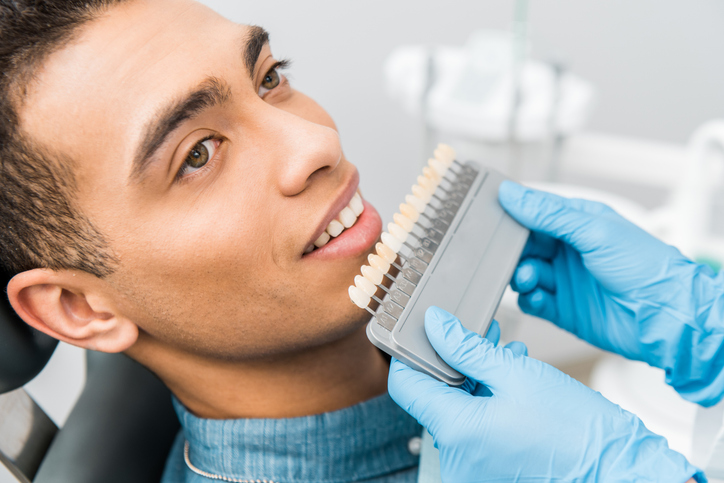
Porcelain veneers are thin, custom-made shells that cover the front surface of your teeth. They’re crafted from high-quality dental ceramic that reflects light like natural enamel, helping them blend beautifully with your smile.
Veneers are a versatile solution that can address multiple concerns at once:
- Stubborn stains that don’t respond to whitening
- Chips and worn edges
- Gaps between teeth
- Uneven or misshapen teeth
- Slightly crooked teeth
The process usually takes two or three visits. Your Winter Springs dentist will prepare your teeth by removing a tiny bit of enamel (about the thickness of a fingernail) to make room for the veneer. Then they take impressions, send them to a lab to hand-craft your veneers, and bond them in place at a final visit.
How They Compare: What Matters Most
Longevity and Durability
This is where the two options really diverge.
Porcelain veneers typically last 10 to 15 years or even longer with proper care. Porcelain is highly stain-resistant, so your morning coffee won’t dull your new smile as quickly. The material is also stronger and less prone to chipping than composite resin.
Dental bonding usually lasts 5 to 10 years before it needs touch-up or replacement. Composite is softer than porcelain, making it more vulnerable to chipping at the edges. It can also stain over time, especially if you regularly drink coffee, tea, or red wine.
Tooth Preservation
This is one of the most important factors to consider.
Bonding is generally the more conservative option. Most bonding cases don’t require any enamel removal, which means the underlying tooth is preserved. The procedure is fully reversible. If you don’t like the result, your dentist in Winter Springs can remove the bonding, and your tooth will still be intact.
Veneers usually require some enamel reduction. This removal is permanent. Once enamel is gone, it’s gone forever. Your tooth becomes dependent on the veneer for protection. If a veneer breaks or falls off, your tooth is exposed and sensitive.
Natural Appearance
Both options can look excellent, but they achieve that look differently.
Porcelain is the closest material we have to natural enamel in how it interacts with light. It has a slight translucency that picks up surrounding color the way real teeth do. This is why well-made veneers disappear into your smile so seamlessly.
Bonding can also look natural in skilled hands, but composite is more opaque than porcelain. Under bright light, it can look slightly flatter. For a single small repair, this rarely matters. But for multiple front teeth, porcelain often delivers a more natural-looking result.
Procedure Time
Bonding is typically completed in one visit and can take as little as 30 minutes per tooth. Veneers require two or three visits over a few weeks because a dental lab custom-makes them.
When to Choose Bonding
Bonding tends to be the better fit for:
- Small chips or cracks on one or two teeth
- Minor gaps that bother you
- Single-tooth color touch-ups
- Patients who want to “test” a new smile before committing to a permanent change
- Patients who want a budget-friendly option
- Patients who don’t want any enamel removed
When to Choose Veneers
Porcelain veneers tend to be the better fit for:
- Multiple teeth that need aesthetic improvement
- Stubborn discoloration that doesn’t respond to whitening
- Teeth that are uneven, worn, or misshapen
- Patients who want the most durable, stain-resistant option
- Patients who want a complete smile transformation
What Patients in Winter Springs Should Know
When patients ask which option is better, the honest answer is that both can produce a beautiful result. The right choice depends on your situation more than on which treatment is “better.”
If you have one small chip on a front tooth, bonding can fix it beautifully in a single visit. If you have multiple concerns, like stains, gaps, and uneven shape across several teeth, veneers may give you a more consistent, longer-lasting result.
Your dentist’s skill makes a huge difference in how natural your results look. Dr. Melvin Benson has earned multiple “Best Dentist” awards and is one of only 6% of dentists to earn a Fellowship from the Academy of General Dentistry. Dr. Firas Marouf graduated with honors from Temple University and is dedicated to patient-centered, personalized care.
Ready to Explore Your Options?
If you’re considering cosmetic dentistry in Winter Springs, the best place to start is a conversation. Dr. Marouf or Dr. Benson will evaluate your smile, discuss your goals, and recommend the option that gives you the natural-looking, confident smile you deserve.
Call New Smile Dentistry & Orthodontics today at (689) 329-1817 or request an appointment online. Your dream smile is much closer than you think.